Synchronous Orders
Synchronicity Exchange is the first DEX to implement synchronous orders (known in traditional finance as debitless orders) with verifiable matching.
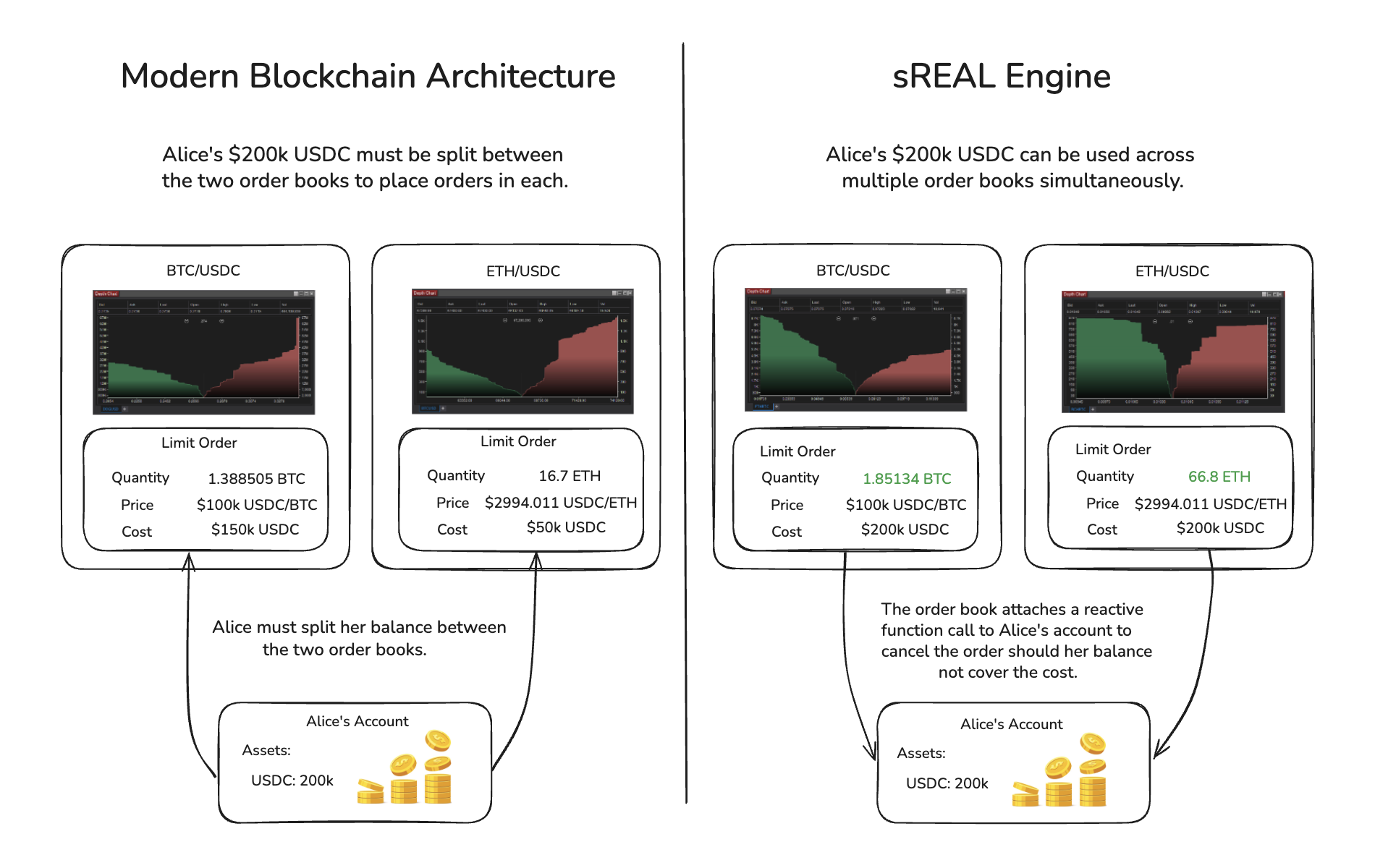
Synchronous orders allow for the same capital to be used in multiple order books simultaneously. A $10,000 deposit can place limit orders up to $10,000 for both BTC and ETH perpetuals. When one fills, the capital is committed to that position and remaining orders are automatically adjusted or cancelled.
Because synchronous orders eliminate the friction to provide liquidity to multiple markets, exchanges with synchronous orders are dramatically more capital efficient than exchanges without them.
Synchronous orders facilitate order books with tighter spreads and deeper liquidity, particularly for the long tail of assets, and lending markets with dramatically lower liquidation risk for borrowers and more opportunities for lenders.
While synchronous orders are a common feature across TradFi, modern blockchain execution environments prevent DEXs from supporting it, causing far less capital efficiency than on CEXs. Some crypto markets (e.g., Polymarket) use intents to enable synchronous orders, but do so at the cost of the verifiability of the matching algorithm.